
You're standing in the garage, reaching up to grab the pull cord because the opener just clunked and stopped halfway, and you notice something: there's no little sensor box near the floor on either side of the track. Your spouse says the door's been working fine for thirty years, leave it alone. You're pretty sure that's exactly the problem. Sound familiar?
This is one of the most common disagreements homeowners have about an older garage door, and it's worth settling with facts instead of gut feeling. Some things on a pre-1990s door are genuine safety issues. Others are just old, and old isn't the same as dangerous.
The one that actually matters: photo-eye sensors
If your door has no small sensor units mounted a few inches off the floor on each side of the track, pointing at each other, this is the single biggest issue to fix. Federal law has required auto-reverse safety sensors on garage door openers since 1993. If your door and opener predate that, or if someone swapped the opener but never added sensors, the door has no way of knowing a kid, a pet, or a bike is in its path before it closes. This isn't a maintenance nicety — it's the difference between a door that stops and reverses, and one that keeps coming down.
Retrofitting sensors onto an older opener is usually straightforward and inexpensive compared to a full system replacement. If your opener can't support modern sensors at all, that's a sign the whole opener, not just the door, is due for an upgrade.
Springs: age matters more than looks
Look at the top of the door. If you see one long spring running across a tube above the door — rather than two shorter torsion springs side by side — you likely have an older single-spring system. These aren't automatically unsafe, but they do have a shorter working life and, because the entire door's weight rides on one spring instead of two, failure tends to be sudden and dramatic rather than gradual.
Watch for these warning signs regardless of spring type:
- The door feels heavier than it used to when lifted manually
- Visible gaps or separation in the spring coils
- A loud bang from the garage (a spring letting go) at some point in the door's history, even if it was "fixed" at the time
- Rust streaks on the spring, especially after a wet winter
Springs are rated for a certain number of open-close cycles, and a 30-year-old spring has seen a lot of cycles. This is not a DIY repair — torsion springs are under enough tension to cause serious injury. It's one of the most common reasons people call a technician rather than tackle a weekend project.
Pinch points on the panels
Run your hand along where two door sections meet, with the door closed. Older steel doors were often made with flat, flush-cut panel edges. Newer doors use a pinch-resistant design where the joints are shaped so fingers can't get caught as the sections fold. If you've got small kids or grandkids around who like to touch the door as it moves, this is worth retrofitting panels for, or replacing the door section by section rather than treating it as urgent for an adults-only household.
What's genuinely fine to leave alone
Not everything that's old is a problem:
- Cosmetic wear — faded paint, minor surface rust on hardware, small dents — is appearance, not function.
- A manual lock slide bolt is fine to keep using as a supplemental lock, as long as you remember to disengage it before using the opener.
- Original tracks and rollers, if they're not bent, rusted through, or making grinding noises, don't need replacing just because of their age. Track alignment and roller lubrication are maintenance items, not retrofit items.
- A heavy wood door in good structural shape doesn't need to be swapped for steel just for the sake of modernizing, provided it still seals and operates smoothly.
What the local climate adds to the list
Dry, hot inland summers followed by wet winters put real stress on an older door. Wood doors and panels can warp or crack as they dry out through a long dusty summer, then swell again once winter rain arrives — check for new gaps at the corners each fall. Dust and wildfire smoke drift into track channels and rollers during fire season, so an older door that was never due for lubrication starts sticking or grinding by late summer. And if your home has had any kind of earthquake retrofit work done, it's worth having a technician check whether the garage door opening itself — often the weakest point in a home's shear wall — has adequate bracing around the frame, separate from the door hardware itself.
When to call San Ramon Garage Door
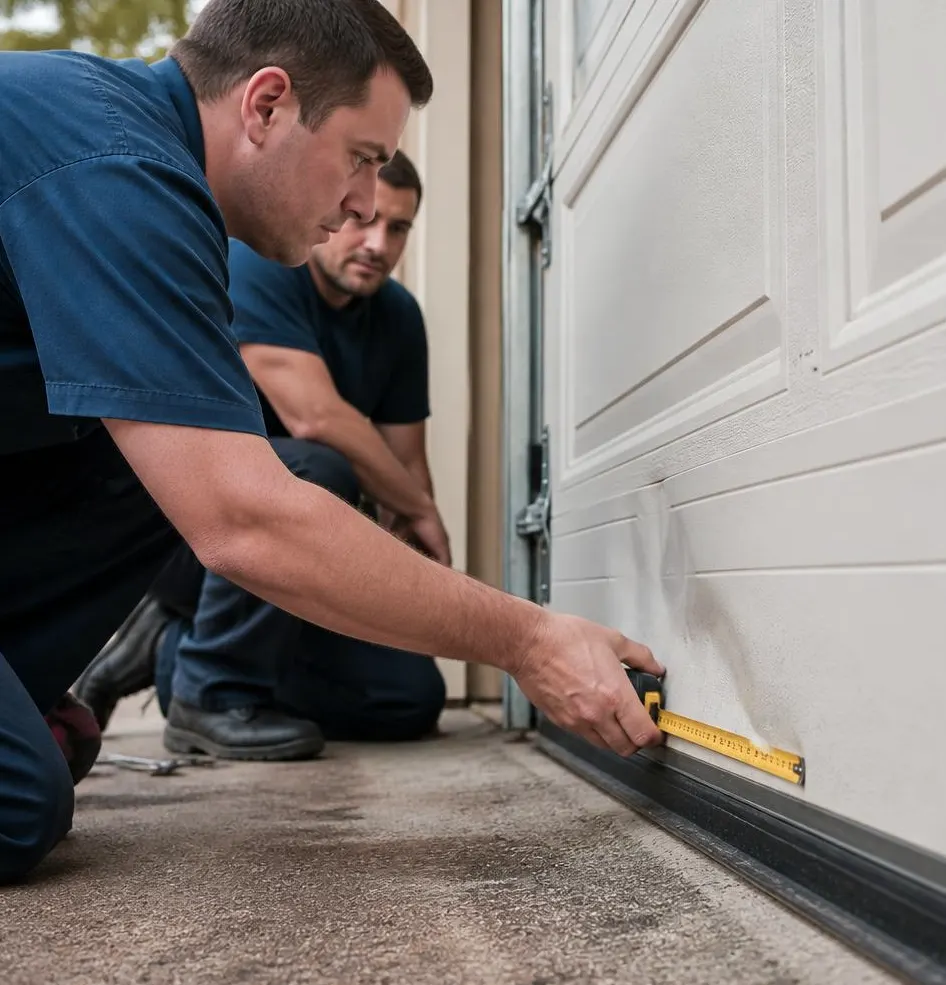
If you've found a door with no sensors, a single aging spring showing wear, or panels that worry you with kids in the house, that's a visit worth scheduling rather than a project to tackle alone. We handle Spring Replacement on both single and double-spring systems, and our Preventive Maintenance service checks sensors, tracks, rollers, and seasonal wear in one visit — the kind of inspection that settles exactly this argument with a straight answer instead of a guess.
If you're in San Ramon, Danville, Dublin, Pleasanton, Walnut Creek, Alamo, Blackhawk, or Livermore and you've got a garage door that's older than some of your kitchen appliances, give San Ramon Garage Door a call. We'll tell you plainly what needs fixing and what can wait — no upsell, just a fair answer.